Instrument architecture
EXOhSPEC instrument architecture.
EXOhSPEC describes a connected programme of fibre-fed, double-pass high-resolution spectrograph development. Each published design, laboratory test bed and Thailand deployment record is identified by revision and location.
2019 published design requirements
Prototype and proposed final-system requirements.
These are design requirements from Lhospice et al. (2019), Table 1. They are design targets and should not be read as measured performance for every later configuration.
| Property | Prototype design requirement | Proposed final-system requirement |
|---|---|---|
| Wavelength coverage | 400–700 nm | 400–1000 nm |
| Resolving power | R > 70,000 | R > 100,000 |
| Order separation | > 30 pixels | > 30 pixels |
| Throughput | > 4% | > 20% |
| RV stability | Not specified in Table 1 | 3 m/s over 1 hour target |
Publication in preparation
Detailed stability subsystems are reserved for a future publication.
Detailed measurement channels, controller relationships and configuration-specific results form part of ongoing closed-loop research. They are intentionally omitted from the public instrument page and retained in the restricted member workspace.
Folded double-pass train
Optical and mechanical development share the same stability envelope.
The published historical design uses a folded optical path with collimating optics, prism cross-dispersion, an echelle grating, a folding mirror and detector. NARIT designed, manufactured and tested the achromatic triplet. Later laboratory configurations have separate records.
Illumination stability
The fibre link is part of the optical system.
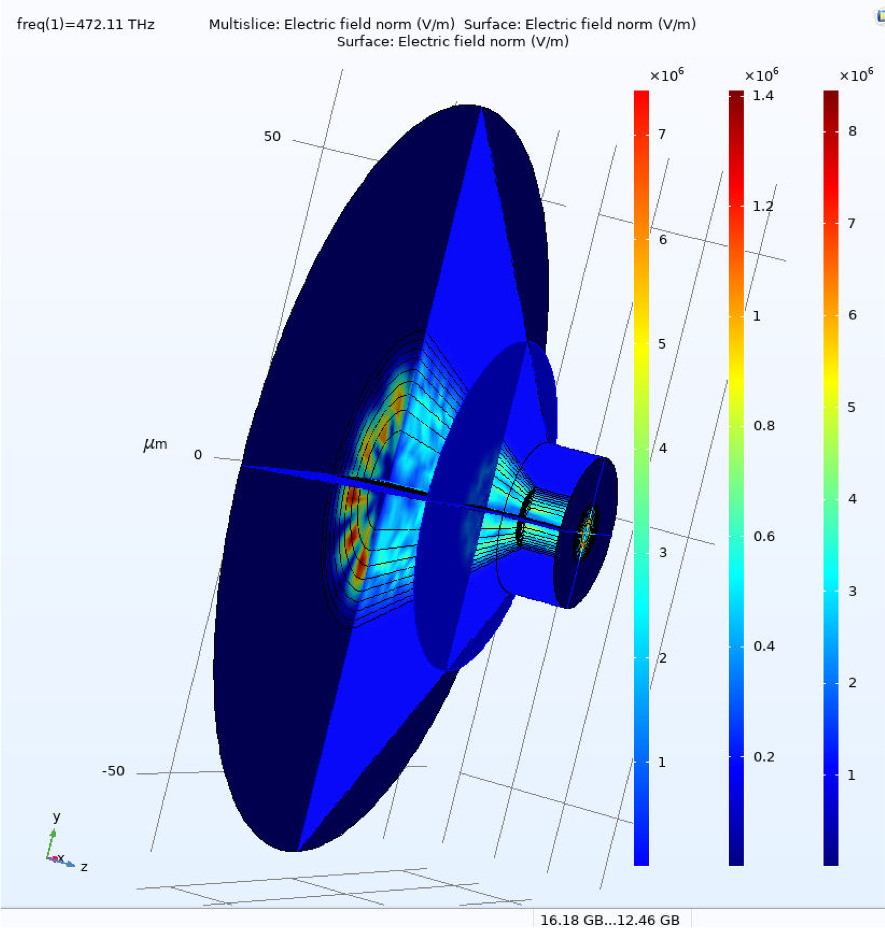
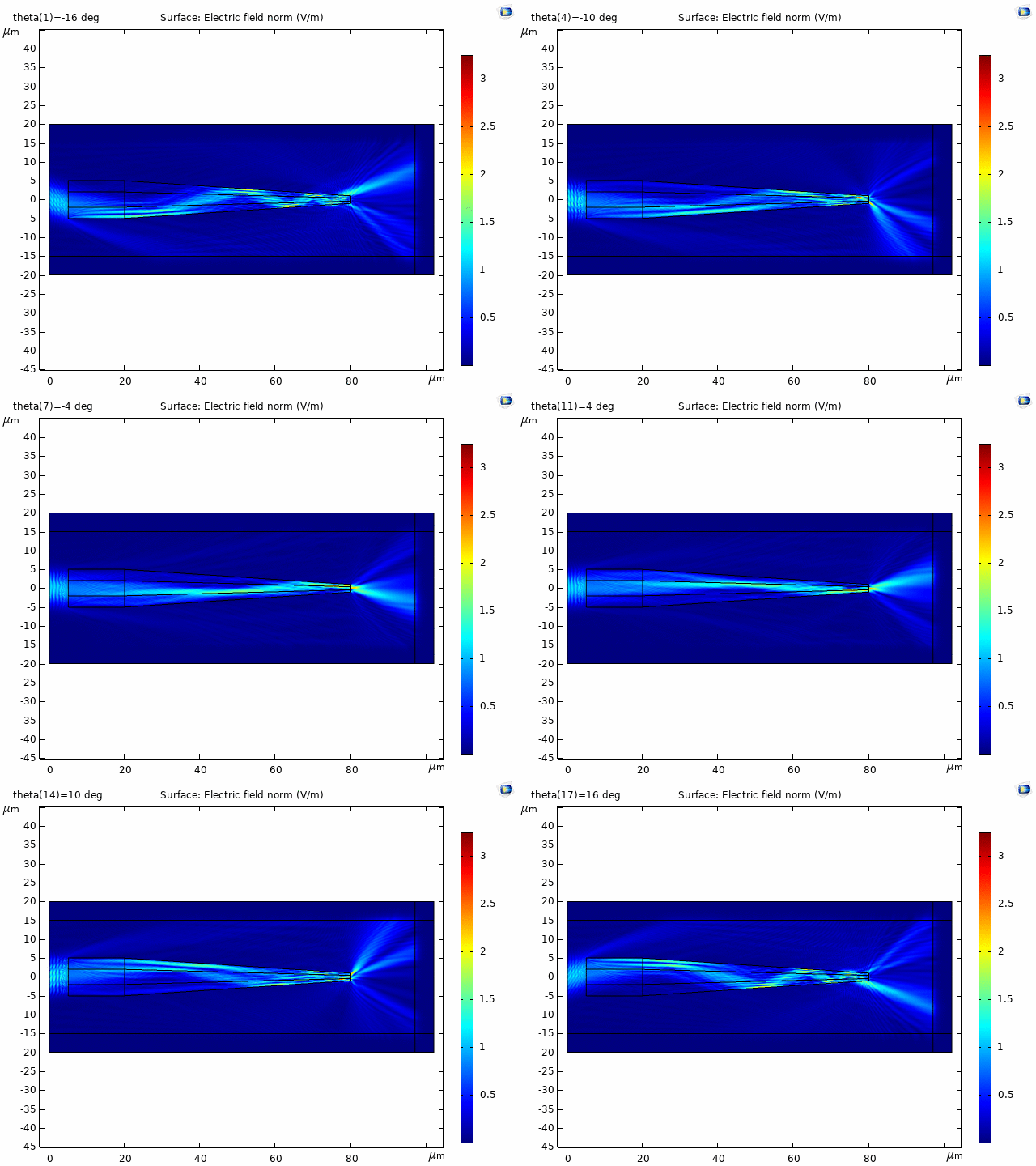
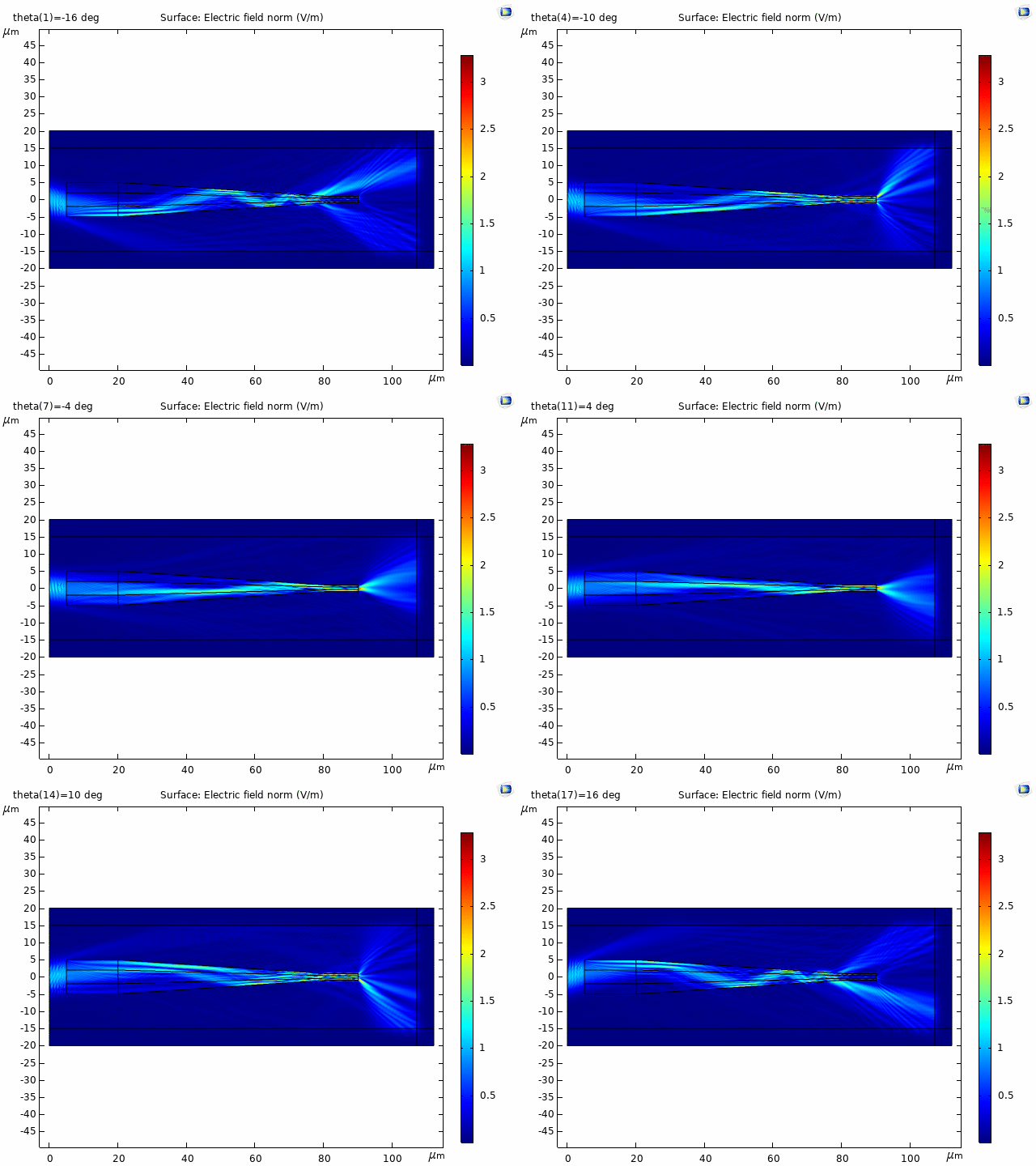
Simulation and bench measurements compare tapered geometries, injection angles and modal behaviour. Optical agitation using a galvanometer was later evaluated as a route to mitigating modal noise.
Tapered-fibre propagation
COMSOL calculations examine different input beams between 0° and 17° and compare larger and smaller taper geometries.
Measure and correct
Arc-line motion provides an image-plane stability signal.
The established system measures spectral-line centroids and commands a piezo active-optics unit. The original programme site reports a metrology result of 0.017 pixel. Configuration-specific working results are held in the member record.
Star to fibre
Guiding keeps the target image on the fibre core.
The acquisition and guiding unit images the target star and focused fibre face simultaneously. Telescope focus and pointing place the star on the darker fibre core; the internal camera supports closed-loop telescope guiding.
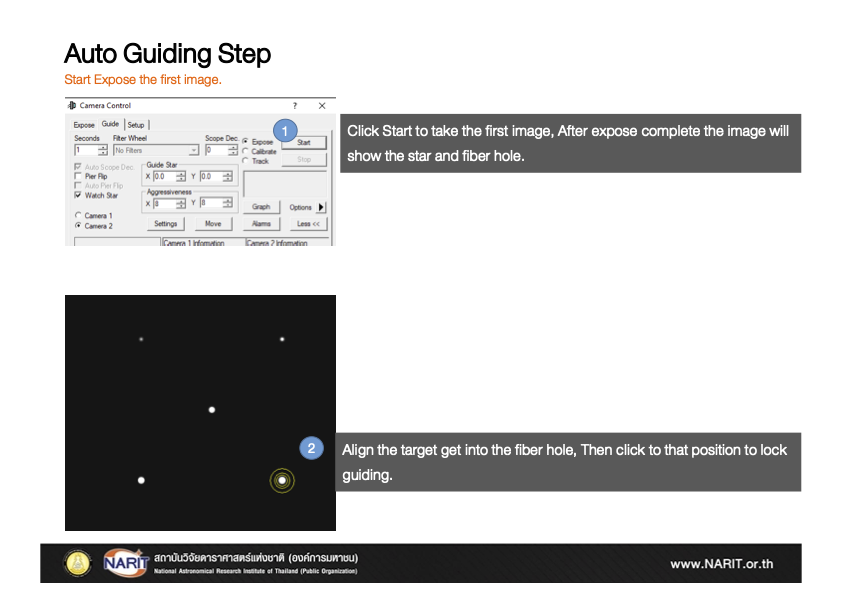
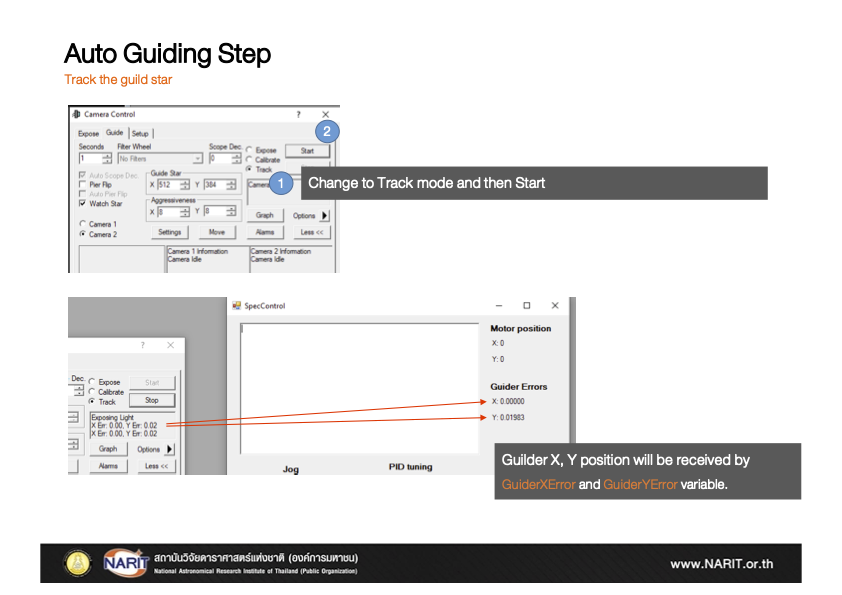
Acquire the target, focus the stellar image, place it on the recorded fibre position, maximise spectrograph flux and maintain the alignment.
Thai National Observatory
Thailand has a distinct instrument and deployment record.
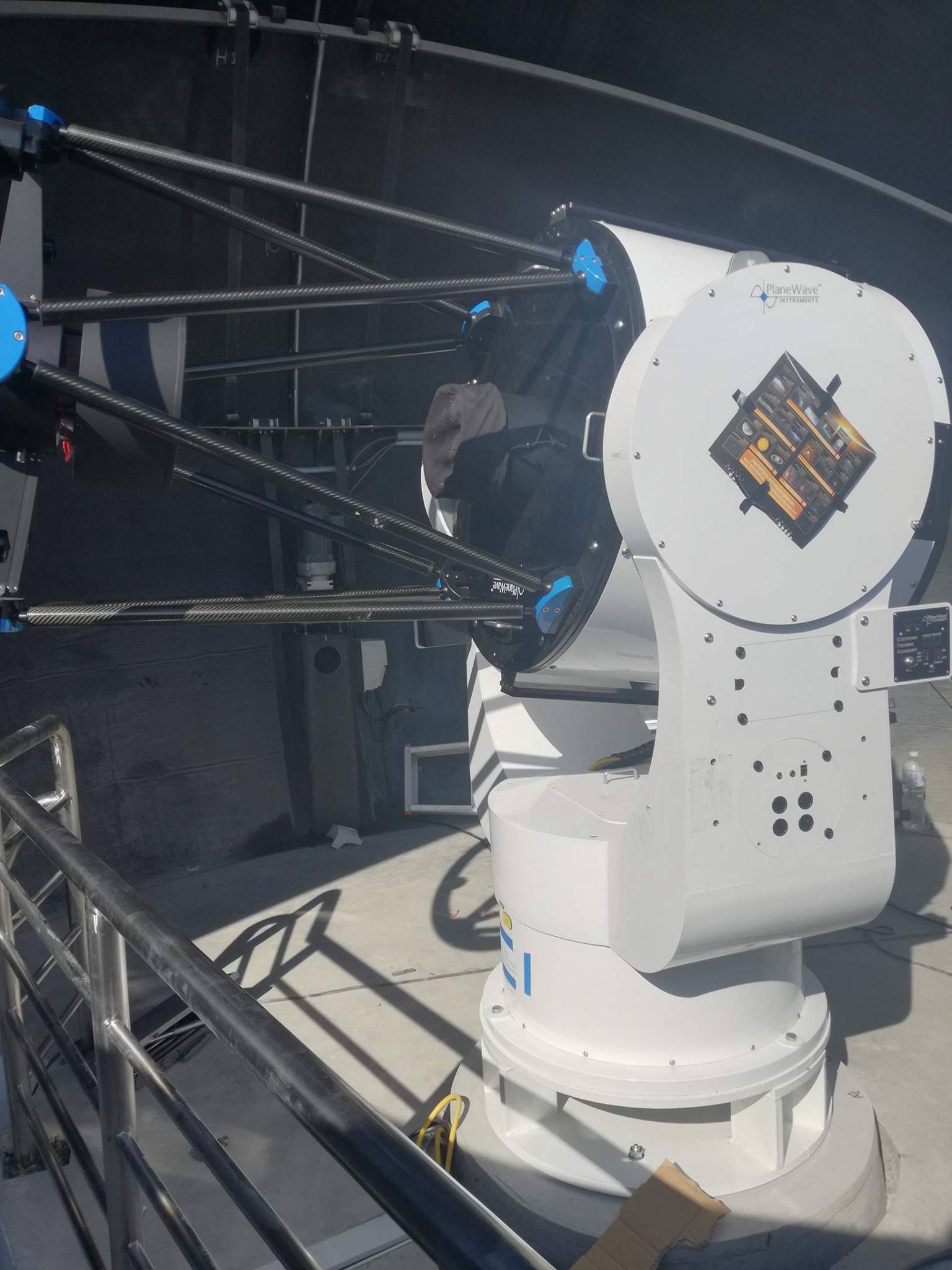
The programme connects the University of Hertfordshire laboratory with NARIT facilities and the 2.4 m Thai National Telescope. NARIT reports a prototype installed and tested at the telescope, while its observatory instrument list still says “under construction”. These may describe different milestones, so this site does not merge them into one current operational claim.